3D Puff Embroidery Digitizing for Florida Caps, Hats and Apparel
3D puff is where a flat file falls apart: foam shows at the edges, letters sew thin and the raised look goes flat. We build puff files by hand for embroidery shops, cap brands and promotional product companies across Florida and the rest of the USA, sealed at every edge and checked against a real stitch-out before it’s yours.
30 Google reviewsDigitizing since 2019Serving embroidery shops across Florida
What Is 3D Puff Embroidery Digitizing?
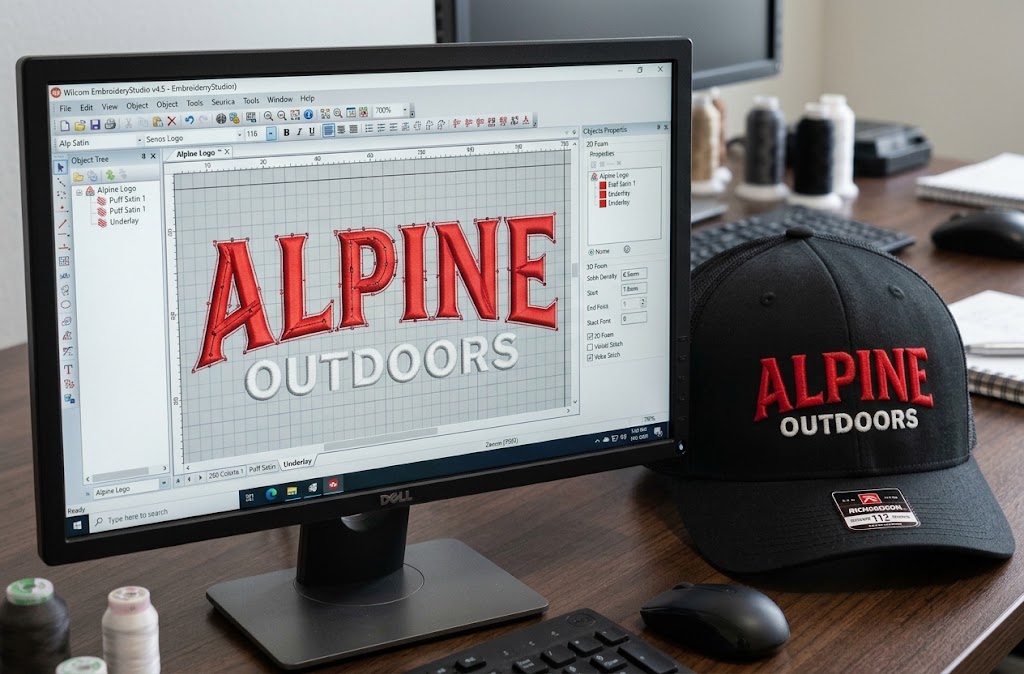
3D puff embroidery digitizing turns a logo into a stitch file that sews over a layer of foam. The foam lifts the stitches off the fabric for a raised, three-dimensional look. A puff file uses dense satin stitches, capped column ends and a planned machine stop so the foam gets covered, cut and sealed cleanly while it sews.
It’s the raised look on the front of snapbacks, trucker hats and streetwear caps, also called foam embroidery or raised embroidery. A flat file with foam slipped under it almost never gives that result. The puff parts have to be built for foam from the start.
Not sure if your logo suits puff? Read 3D puff vs flat embroidery: when puff works and when it fails.
Why a Flat Embroidery File Won't Sew Clean Puff
Foam changes almost every decision in the file. A design that sews perfectly flat can show foam, tear or lose its height once it runs over a foam insert.
Foam Shows Through
Fill stitches and light density leave gaps, so white or colored foam peeks out.
Open Column Ends
Uncapped satin ends let foam escape and leave ragged, fuzzy edges.
Flattened Height
Heavy underlay on top of the foam crushes it before the top stitches arrive.
No Clean Stop
Without a planned stop, the operator has no clean point to lay down the foam.
What Goes Into a Production-Ready 3D Puff File
Satin Columns
Every raised shape is satin, with stitch angles kept close to perpendicular so each stitch helps cut the foam edge.
Stitch Density
Tighter than flat work to fully cover and perforate the foam, without so much that thread starts breaking.
Underlay
Stabilizes the fabric before the foam goes down, then kept minimal on top so the foam keeps its height.
Pull Compensation
Foam height exaggerates pull, so shapes are widened to sew at true width instead of squeezed thin.
Push Compensation
Column ends are adjusted so letters don’t sew short once the foam pushes the stitches outward.
End Caps
Every satin end is capped so foam is fully encased and edges finish sharp and clean.
Sequencing and Stops
Flat elements sew first, then a stop for foam, then puff. On caps, center-out and bottom-up.
Trims and Jumps
Paths are planned to avoid long jumps that drag across foam and tear it before removal.
Foam Thickness
Built to your foam: 3mm is common on cap fronts, 2mm for smaller items, 4mm for bold, tall designs.
Caps, Hats and Apparel We Digitize 3D Puff For
Structured Caps
Firm buckram front panels are the classic home of puff.
Snapbacks
Taller, flatter panel that suits bold puff wordmarks.
Trucker Hats
Foam-front, mesh-back caps worn all over Florida.
Dad Hats
Softer unstructured fronts need adjusted density and sizing.
Beanies
Knits stretch, so density is planned and topping is recommended.
Visors
Popular for golf, beach and resort merchandise.
Jackets and Hoodies
Chest logos and backs, often mixed with flat embroidery.
Bags and Patches
Canvas totes and embroidered patches with raised elements.
Which designs work best in 3D puff
Puff rewards bold, simple shapes. Lettering usually needs to be about half an inch (around 12mm) tall or more to read cleanly, and very thin strokes can’t cut the foam. Not every logo suits puff, so we flag it upfront if a design needs simplifying or part of it should stay flat.
- Foam fully encased at every edge
- Letter height and stroke width checked before we start
- Flat and puff combined in one file when it looks better
How to Order a 3D Puff File
Four steps from your logo to a puff file that sews right.
Send your logo
Vector, PNG, JPG or a clear photo. Tell us the size, placement, foam thickness and machine format.
We check it for puff
Letter height, stroke width and small details. We flag anything that needs adjusting first.
A digitizer builds it by hand
No auto-trace. Satin columns, capped ends, density, compensation and stops set for your foam.
Proof, stitch-out check, delivery
You approve a digital proof, the file is checked against a real stitch-out, then delivered within 24 hours.

Low-resolution artwork?
Clean artwork makes a cleaner puff file. If your logo is blurry or pixelated, our vector artwork service can redraw it first.
Already have a flat file?
We can usually keep your flat elements and rebuild only the parts you want raised, instead of starting from zero.
3D Puff Digitizing Pricing
Simple flat pricing for 3D puff. Puff is denser than flat work, so it is priced a little higher than a flat logo. Your price is confirmed on your quote before work starts.
Turnaround and Revisions
Files are delivered digitally, so turnaround is the same whether you’re in Tampa or anywhere else in the USA.
3D Puff Digitizing for Florida Embroidery Shops and Cap Brands
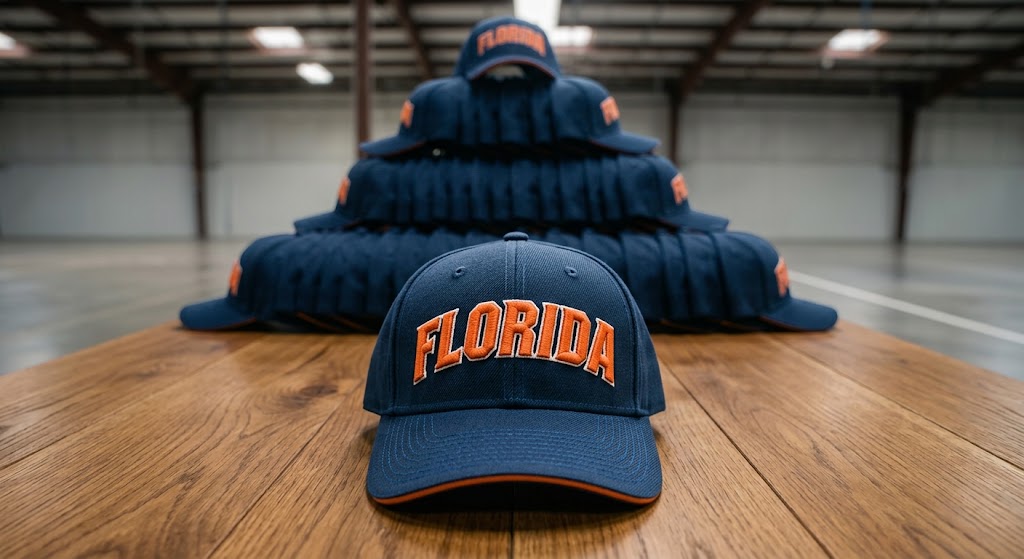
Few states wear as many caps as Florida. Fishing and boating brands, beach and resort shops, golf courses, school and club sports, food trucks and local streetwear labels all rely on a strong logo on the front of a hat, and raised puff is one of the most requested looks.
Florida caps also work hard. Mesh-back trucker hats and performance caps get worn in sun, sweat and salt air and washed often. A properly dense, fully sealed puff file keeps the foam covered wash after wash.
We work with shops, decorators and brands throughout the state, and files are delivered by email, so there’s no shipping delay either way.
Where we work
Embroidery shops, promo companies and cap brands across the state, plus the rest of the USA.
Embroidery File Formats We Deliver
Production-ready files for every major commercial and home embroidery machine. Tell us which machine you run and we’ll send the right format.
Tip: DST files don’t store thread colors, so every order includes a color sequence sheet that tells your operator which needle runs which color.
Why Choose XcellentPlus for 3D Puff Digitizing
Hand-Digitized for Foam
Built stitch by stitch for puff, not a flat file with foam added after.
Checked on a Real Stitch-Out
Verified against how it actually sews, not just simulated on screen.
Free Revisions
If something doesn't sew right, we fix it at no extra cost. Once paid, the file is yours.
3D Puff Embroidery Digitizing FAQs
Quick answers for embroidery shops, decorators and cap brands ordering puff files.
Still have a question?
Send us your logo and tell us the cap or garment. We'll reply with a quote and answers.
Ask Us Anything01What is 3D puff embroidery digitizing?
It's the process of creating an embroidery machine file that stitches over foam to produce a raised, three-dimensional design. The file uses dense satin stitches, sealed column ends, and a machine stop for foam placement.
02Can you convert my flat embroidery file to 3D puff?
Usually the puff parts need to be redigitized, because flat files use fills, lighter density, and open column ends that don't work over foam. We can often keep your flat elements and rebuild only the areas you want raised.
03What foam thickness should I use for 3D puff embroidery?
3mm foam is the most common choice for cap fronts. 2mm suits smaller or softer items, and 4mm gives a taller look on bold, simple designs. Tell us your foam, and we'll build the file to match.
04What is the minimum text size for 3D puff embroidery?
As a general rule, puff lettering should be about 0.5 inch (around 12mm) tall or larger. Thin strokes and small details are better sewn flat. Send your artwork and we'll check it.
05Why does foam show through my puff embroidery?
The most common causes are low stitch density, fill stitches instead of satins, open column ends, or thread that doesn't match the foam color. A properly digitized puff file fixes the first three.
06Why does my 3D puff embroidery look flat?
Heavy underlay on top of the foam, loose density, or foam that's too thin can all crush the raised effect. Puff files need minimal underlay over the foam and density matched to the foam height.
07Can flat and 3D puff be combined in one design?
Yes, and it often looks best. Flat details sew first, the machine stops for foam, and the raised elements sew after. We plan the sequence inside the file.
08Can you digitize 3D puff for beanies and knit hats?
Yes. Knits stretch, so we adjust density and sizing, and we may recommend a topping to keep stitches from sinking into the knit.
09How much does 3D puff digitizing cost?
3D puff digitizing costs $20 for a standard design and $28 for a detailed one. See our pricing page for rates. We always confirm your quote before starting.
10How long does 3D puff digitizing take?
Standard delivery is within 24 hours of an approved quote. Same-day rush is available on request.
11Do you serve embroidery shops and brands in Florida?
Yes, across Miami, Orlando, Tampa, Jacksonville, Fort Lauderdale and elsewhere in the state, plus the rest of the USA. Files are delivered by email, so you can run them right away.
12Do I own the embroidery file?
Yes. Once the order is paid, the file is yours to keep and reuse.
Ready to Raise Your Logo?
Send your artwork with the size, placement and file format. You’ll get a quote first, a production-ready puff file within 24 hours, and free edits until your sew-out looks right.
Need flat work too? See embroidery digitizing, logo digitizing and cap digitizing.